Every tradesman is familiar with the sinking feeling of reaching for a tool in the middle of a task and fishing through a mess of nails, bent screws and sawdust instead. That few seconds of searching may not seem much, but times that over an 8-hour shift and it's hours of lost productivity and increasing physical strain.
A poorly balanced belt doesn't just slow you down - it pulls unevenly on your hips and lower back (and by the time it's noon your spine knows it). The weight of an unorganized rig contributes to constant micro-adjustments in posture with the effect of accelerating fatigue long before the job is done.
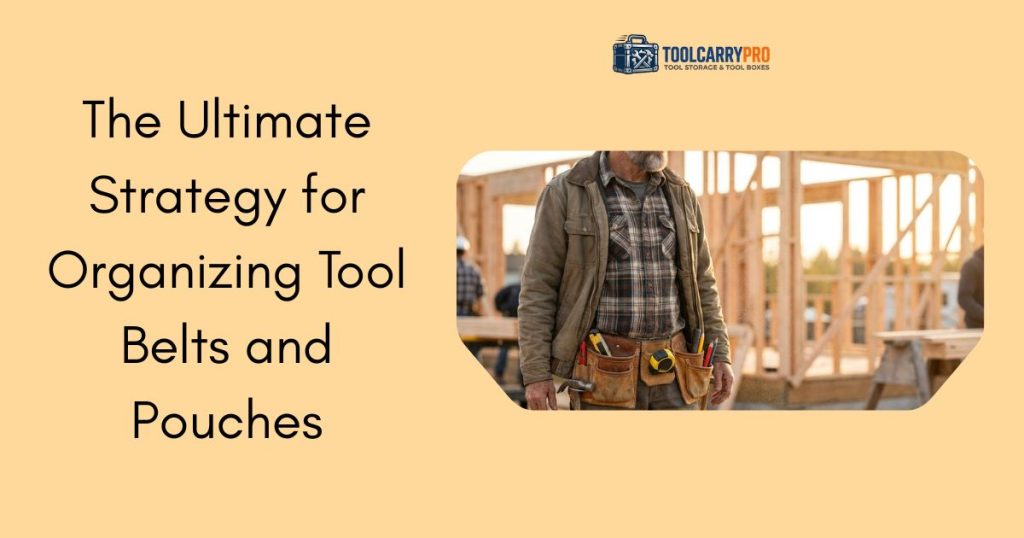
This guide takes you through a strategic, muscle-memory approach to pouch layout - one that professional tradesmen use to get faster, safer, and get off the job at the end of the day with energy to spare.
The Golden Rule: Dominant/Non-Dominant Layout
The basis for any efficient tool belt set-up is the rigid separation of your working side from your feeding side. Your dominant side has the tools that you act with - the tools you grip, swing, cut and mark with. Your non-dominant side contains the supplies that feed those actions such as fasteners, anchors, and measuring tape.
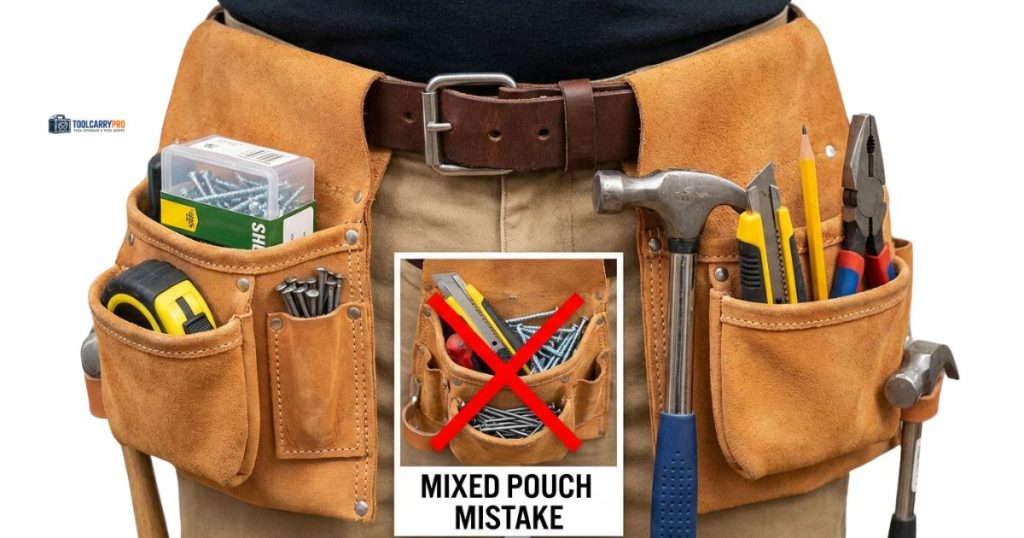
Mixing sharp hand tools in the same bag with loose fasteners is a very expensive mistake that professionals learn to avoid quick. When a utility knife is sharing space with a dump pouch of nails, the blade dulls prematurely, screws get stuck in the pockets and reaching blindly into that mess is exactly how tradesmen end up with sliced cuticles and bent tool edges. Keeping these classes physically separated helps protect your tools as well as your hands at the same time.
Setting Your Dominant Side for Action
Your dominant side pouches are your action zone and everything put in here should be serving immediate, hands-on work. This side must contain your main striking and cutting tools, which will be your main hammer in its dedicated loop, your utility knife in a quick draw slot, and two or three carpenter pencils in a dedicated sleeve. Every piece of equipment in here should be accessible in less than a second without looking down.
The layout of this side is not only about speed - it is directly related to job site safety. When a tradesman needs to strike a nail or score a line and they are up on a ladder, the last thing they are in the mood for is to reach across their own body and grab a tool from the wrong hip. That cross-body reach changes weight, disturbs balance and is one of the leading causes of falls on the job.
Keeping your dominant side lean and deliberate is what stands between a professional rig and a beginner's setup. Resist the urge to load this side with backup tools "just in case." A crowded dominant pouch makes the very hand it is meant to serve slow.
Setting Up Your Non-Dominant Side for Feeding
The non-dominant hand is not the passive hand - it is the feeding hand and it is its side of the belt which should be constructed totally around its function. Professional tradesmen always load their non-dominant hip with wide-open dump pouches that are used to hold bulk fasteners such as nails, screws, drywall anchors and staples. The deep, open design permits a quick scoop as opposed to a precise reach, which is what a feeding hand requires.
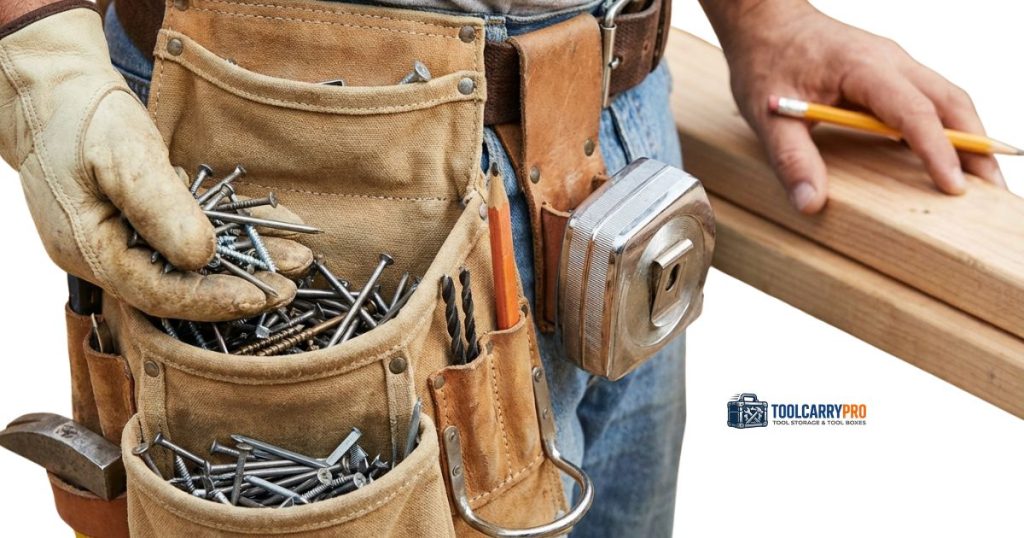
The tape measure also belongs on this side, and, more significant than most beginners realize. When your tape measure is on the non-dominant hip, your dominant hand is entirely free to hold a pencil and make the mark in one flowing motion. Placing the tape to the dominant side forces a clumsy hand-swap that interrupts your rhythm dozens of times a day.
Round out this side with drill bit holders, small square, or cat's paw, if your trade calls for it. The logic always is the same - whatever helps the dominant hand live here, whatever the dominant hand uses directly lives on the other side.
Maximizing the Back of the Belt for Balance
Using the Rear Dead-Space Strategically
The back half of your belt is dead space that most tradesmen don't consider at all - and that is a huge ergonomic error. Distributing the weight to the back of the belt counteracts the pull forward as the front pouches are loaded causing strain on the lower back that drastically changes the way the whole rig sits on your hips throughout the day. A well-balanced belt has a noticeable decrease in weight in just one hour on the job.
What to Store in the Back?
Use this real estate in the rear wisely by mounting a secondary hammer loop or hanging a chalk line, pry bar or speed square back in the rear. These are bulky, sometimes-used items which take up awkward space on the front of the hips but ride quietly out of the way when behind you. The result is a rig that pulls in all directions equally instead of dragging the front of your waistband down all shift long.
The Empty Pouch Strategy
Understanding the 80/20 Carry tool rule
Experienced tradesmen live by a simple truth: on any given job, they are busily using only a fraction of the tools they carry. The 80/20 rule is no better illustrated than in the tool belt - about 80% of the work for the day is done with the same 20% of tools and the rest of what hangs off your hips is dead weight that your body is paying for in fatigue.
Why You Should Be Getting Rid of Dead Weight?
The smartest adjustment you can make is to force yourself to take out tools that are not part of your current phase of the trade and to ensure at least one small pouch is totally empty. It sounds counter intuitive, but a professional rig is not the heaviest rig - it's the most intentional rig. Cutting unneeded weight directly translates into reduced compression on the hip and enhanced mental focus on the work at hand.
How the Empty Pouch operates as a Staging Area?
That empty pouch is not wasted space - it is a dynamic staging area. When you're moving into a task that requires specialty hardware such as wire nuts, masonry anchors or uncommon drill bits, you load that one pouch for that one phase and empty it when you move on. This keeps your belt responsive for the work, rather than a static archive of everything that you might theoretically need.
End of Day Maintenance and Purging of Debris
The Daily Purge Habit
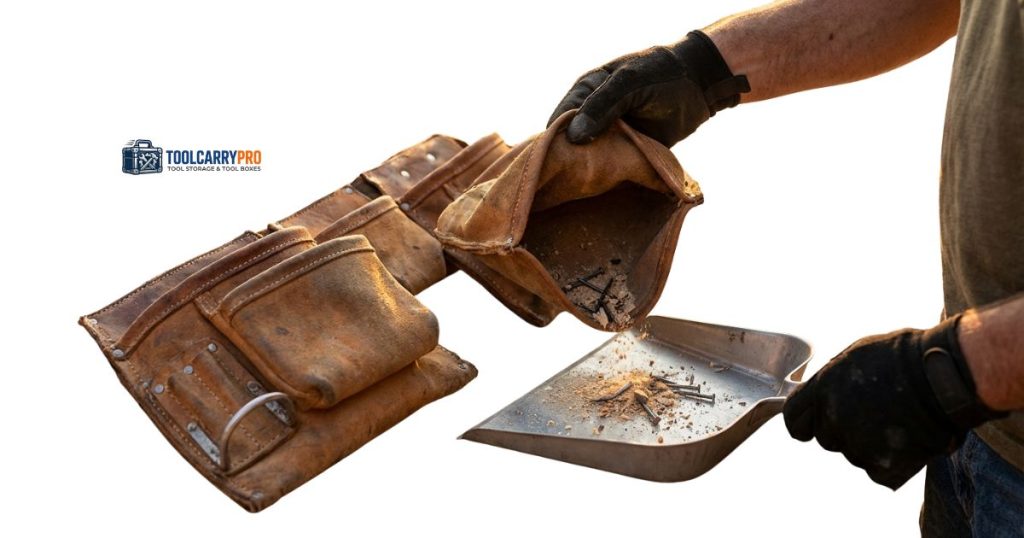
One of the most underrated habits of a professional tradesman is to turn the whole belt inside out at the end of each shift. Sawdust, bent nails, broken pencil tips and construction debris pile up in the bottom of every pouch throughout the day and, if left to sat, that material acts like sandpaper against the insides stitching with every movement. A thirty-second daily purge carries away the abrasive material before it does any lasting damage.
Inspecting and Maintaining the Material
Beyond emptying the pouches is a quick inspection of the stitching and rivets at the end of each day to catch wear before it turns into failure. It is particularly important to wipe down leather belts and let them air dry prior to storage as trapped moisture will accelerate breakdown of both the material and the thread. A belt that is cleaned and inspected daily will last years longer than one that is just tossed in the truck at the end of a shift.
If you're looking for pouches that can handle this type of day-to-day wear and tear, you should check out the Complete Guide to Professional Tool Belts for a complete breakdown of the best materials, brands, and standards of construction available to today's tradesmen.
Conclusion: Creating Job Site Muscle Memory
Why Consistency Makes for Speed?
Speed on the job site is not a matter of hurrying - it is a matter of eliminating every moment of hesitation. When a tradesman has committed to a uniform layout, and is unwilling to deviate from it, the hands consequently begin to operate before the brain actually directs them, which is exactly what the muscle memory means in practice. That automatic reach for the hammer, that instinctive scoop into the nail pouch - those fractions of a second, repeated hundreds of times a day, add up to real and measurable productivity.
Committing to Your Layout
Choosing your layout is only the first step - adhering to it with all jobs in all seasons on all sites is what makes a good rig a professional edge. Tradesmen that maintain a consistent configuration in the pouch report less fatigue at the end of a day's work, fewer tools dropped, and quicker transitions from one task to another simply because their body is not having to expend energy looking for and expend it building. Organize once, and commit all the way, and let the muscle memory do its job.
Disclaimer - No Affiliate Links: We are not using any affiliate links on this site. This blog is written solely with the aim of helping our readers to make informed unbiased decisions.