Few tool storage products manage to be genuinely functional, beautifully designed, and collectible all at once. The Toyo Steel cantilever toolbox is one of the rare exceptions. Made in Japan from a single sheet of pressed steel, it has earned a cult following that stretches far beyond the workshop, appearing in artist studios, kitchens, craft rooms, and on the shelves of design enthusiasts around the world.
But is it worth the premium price? And which model is right for you? This complete guide breaks down everything you need to know about the Toyo Steel cantilever toolbox: its history, construction, model range, real-world uses, and how it stacks up against the competition. By the end, you'll know exactly whether this Japanese icon deserves a spot in your setup.
What Is the Toyo Steel Cantilever Toolbox?
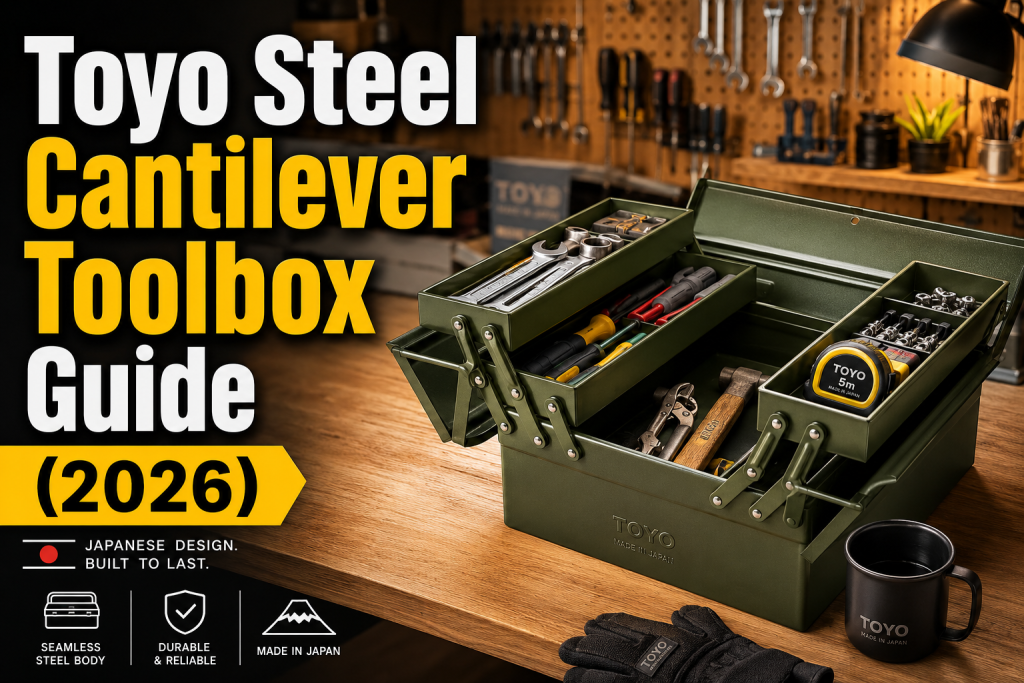
At its core, the Toyo Steel cantilever toolbox is a two-tier metal storage box with a hinged, self-lifting tray system. When you open the lid, the upper trays swing up and outward on cantilever arms, revealing the deep storage compartment below while keeping your small parts and frequently used tools within easy reach.
The Cantilever Design Explained
The word "cantilever" refers to the linkage arms that connect the lid to the trays. As you lift the lid, those arms raise the upper trays automatically and angle them toward you. This is the same mechanism found on classic fishing tackle boxes and sewing boxes, and it's brilliantly practical. You get instant access to two levels of storage in a single motion, with no separate lids to remove or set aside.
Why It Stands Out?
What separates the Toyo box from generic cantilever boxes is the material and the manufacturing. Instead of plastic or welded sheet metal, Toyo uses pressed steel formed from a single sheet. The result is a box with smooth, hand-friendly edges, exceptional rigidity, and a powder-coated finish available in a striking range of colors. It looks less like a disposable hardware-store item and more like a piece of industrial design.
The History Behind Toyo Steel
Understanding the brand helps explain the price and the devotion it inspires.
A Japanese Manufacturing Pioneer
According to Toyo Steel's official company page, the company was established in 1969 and was the first in the world to successfully develop a deep-drawing technology capable of making a seamless steel toolbox from a single sheet of steel. That innovation is the foundation of everything the brand is known for today. A seamless body means fewer weak points, no welds to crack, and a structure that can take decades of abuse.
Dominance in the Home Market
Toyo didn't just invent the technique, it came to dominate its home market. As detailed in Silodrome's feature on the brand, Toyo became a dominant force in the Japanese steel toolbox market, reaching close to 70% domestic share. Its boxes were adopted by tradespeople, factories, and workshops, but the clean lines and colored powder-coated finishes gave them appeal well beyond industrial use.
From Workshop to Lifestyle Object
Over time, Toyo toolboxes began appearing in homes, artist studios, and even as lifestyle accessories. That crossover appeal is a huge part of the story. The same box that holds a mechanic's sockets might hold a jeweler's tools, a hobbyist's paints, or a chef's knives. The name Toyo roughly translates to "east–west," reflecting the company's ambition to bridge Japanese craftsmanship with Western markets, a point noted by Swedish retailer Skansen.
How the Toyo Toolbox Is Made?
The construction is where the premium price starts to make sense.
Deep-Drawn, Single-Sheet Steel
Deep drawing is a metal-forming process where a flat sheet of steel is pressed into a die to create a seamless, three-dimensional shape. Because the body is formed rather than welded together, there are no seams to split and no sharp welded edges. Toyo describes its boxes as crafted from pressed steel components made from a single sheet, offering strength while keeping edges smooth and hand-friendly.
The Powder-Coated Finish
After forming, the boxes receive a durable powder-coated finish. This is what gives Toyo boxes their signature look, from muted, sophisticated tones like moss green and beige to bold blacks, blues, and even a light purple called Fujimurasaki. The coating resists scratches and rust far better than cheap paint, which is why vintage Toyo boxes still look presentable decades later.
Award-Winning Design Pedigree
Toyo's commitment to form as well as function has been formally recognized. The camber-top Y-350 model, for instance, received the Good Design Award in 2009, a prestigious Japanese design honor. That blend of engineering and aesthetics is exactly why these boxes appeal to designers as much as tradespeople.
Toyo Steel Model Range Explained
Toyo makes several families of toolboxes, and the naming can be confusing at first. Here's how the lineup breaks down.
The ST Series (Classic Two-Tray Cantilever)
The ST-350 is the flagship and the box most people picture when they think "Toyo." It features a cantilever lid with two upper storage trays that can be subdivided using included steel dividers, plus a large lower compartment. As described by retailer Snuggly Monkey, the upper level splits into long compartments while the bottom layer stores larger items like projects and bigger tools.
The GL and GT Series (Padlockable and Larger)
- GL-350: Similar to the ST but with two upper trays featuring adjustable, removable dividers and a hole for a padlock, adding security.
- GT-350: Steps up to three upper storage trays with adjustable dividers and a padlock hole, offering more granular organization.
- GT-410: A larger-footprint version of the GT for those who need extra capacity.
The T Series (Trunk Shape)
The T-350 is a trunk-shaped box where the handle is mounted on top. Toyo notes that because the handle sits on the lid, the box can be carried without disturbing the arrangement of items inside, making it ideal for transporting delicate or carefully organized contents.
The Y Series (Camber-Top / Mountain Shape)
The Y-350 features a distinctive peaked, "mountain-shaped" lid. Beyond looks, this camber top provides extra clearance for taller items and is the model that earned the Good Design Award. It's a favorite among those who want the Toyo look with a bit more character.
Choosing the Right Size
The numbers in the model names roughly correspond to size in centimeters, so a 350 model is about 35 cm wide and a 410 is larger. If you're unsure which capacity suits your tools, our detailed Toyo tool box size guide walks through the dimensions of each model so you can match the box to your kit without guesswork.
Specifications and Dimensions
Knowing the numbers helps set expectations before you buy.
Typical ST-350 Dimensions
The popular ST-350 measures roughly 13.3 inches long by 6.2 inches wide by 6.6 inches tall, according to product listings such as Isadora Popper. That makes it a compact, tabletop-friendly size, big enough for a substantial hand-tool kit but small enough to carry comfortably and store on a shelf.
Capacity and Layout
The two-tier layout is the key to its usefulness:
- Upper trays: Ideal for small parts, fasteners, bits, markers, or precision tools. Removable dividers let you customize compartment sizes.
- Lower compartment: A single deep well for larger tools, cordless drills, project materials, or anything that won't fit up top.
Weight and Portability
These are solid steel boxes, so they carry real heft even when empty, which is part of the quality feel. The folding steel handle sits flush when not in use, and the balanced design makes even a fully loaded box manageable to carry short distances. For a stationary bench box or light transport, portability is excellent, though it's not meant to replace a rolling chest for a full mechanic's kit.
What Does a Toyo Toolbox Cost?
Toyo boxes sit at a premium price point, and it's worth understanding why.
Current Pricing
Pricing varies by model, color, and region, but the ST-350 typically runs around $144.90 to $160 USD through retailers, based on current listings on Toyo's official store and resellers like Zilly Monkey. In Japan, matte black variants list around ¥8,200. Larger GT and specialty finishes can cost more.
Is It Worth the Price?
That's undeniably expensive for a box of this size, and it's fair to ask why. The answer comes down to materials, manufacturing, longevity, and design. If you view it purely as tool storage, cheaper options exist. If you view it as a lifetime-quality object with genuine design credentials, the math changes. We explore this exact question in our article on why toolboxes are so expensive, which explains how materials, brand, and construction drive pricing across the market.
Budget Alternatives Worth Considering
If the Toyo premium isn't in your budget, there are still excellent options. Our roundup of the best toolbox for the money for home garages highlights value-focused boxes that deliver strong performance without the designer price tag. The Toyo is a want, not a need, and that's okay.
Who Should Buy a Toyo Steel Toolbox?
This box isn't for everyone, and being honest about that helps you decide.
Tradespeople and Mechanics
For professionals who value durability and don't mind paying for it, the Toyo is a reliable, seamless box that will outlast most alternatives. Mobile mechanics and technicians who carry a curated set of hand tools appreciate the two-tier access and the rugged, weld-free body. That said, those needing large-volume mobile storage may prefer a dedicated system, like the setups covered in our guide to toolboxes and wall storage systems for mechanics at home.
Artists, Crafters, and Hobbyists
This is arguably where Toyo shines brightest. The compartmentalized trays are perfect for:
- Art supplies like brushes, tubes, and pens
- Sewing and embroidery tools, thread, and hoops
- Jewelry-making components and precision instruments
- Model-building and hobby kits
The attractive colors mean the box looks at home on a desk or studio shelf rather than hidden in a garage.
Design-Conscious Buyers
Some people simply want beautiful, functional objects. If you appreciate Japanese manufacturing and industrial design, the Toyo delivers a tactile, well-made product that doubles as decor. It's frequently used for everyday storage of everything from cables and gadgets to first-aid supplies and hobby gear.
Not the Right Fit If…
If you need weatherproof outdoor storage, maximum volume for a full professional tool set, or the lowest possible price, the Toyo isn't your best match. It's a specialized product that trades sheer capacity for quality, looks, and clever organization.
How to Care for Your Toyo Toolbox
One of the joys of a quality steel box is that it rewards a little care with decades of service.
Keeping the Finish Pristine
The powder coating is durable but not indestructible. Wipe the exterior with a damp cloth and mild soap to remove grime, and dry it thoroughly to prevent any moisture from sitting in seams or on the handle hardware. Avoid abrasive cleaners that could dull the finish.
Preventing Rust
Steel can rust if the coating is chipped and exposed to moisture. Store the box in a dry environment, and if you notice a chip, a small dab of touch-up paint will seal the exposed metal. Keeping silica gel packets inside can help control humidity if you store tools that are sensitive to moisture.
Maintaining the Cantilever Mechanism
The linkage arms and hinges are the moving heart of the box. A tiny amount of light machine oil on the pivot points keeps the action smooth and prevents squeaks. Avoid overloading the upper trays with extremely heavy items, since the cantilever arms are designed for small parts and tools rather than maximum weight.
Toyo vs. the Competition
How does the Toyo stack up against other storage approaches?
Toyo vs. Vintage Steel Boxes
Vintage American steel boxes have their own devoted following, and there's a real debate about old-versus-new construction. We tackle this comparison directly in our piece on whether a vintage Waterloo tool box beats modern alternatives. The short version: vintage boxes can offer charm and heavy-gauge steel, but Toyo's seamless construction and consistent modern finish are hard to beat for reliability.
Toyo vs. Large Tool Chests
The Toyo occupies a different category from a full rolling chest. If you're building out a serious garage storage system rather than a portable box, our ultimate guide to tool chests and organizers covers the larger stationary options. For those wanting a statement centerpiece, a stainless steel tool chest offers a different flavor of premium. The Toyo complements these systems rather than replacing them, serving as the grab-and-go box for your most-used tools.
The Verdict on Value
Against direct competitors, the Toyo wins on design and material quality while losing on price and raw capacity. It's the box you buy when you want something that works beautifully and looks the part, not when you're chasing the cheapest storage per cubic inch.
Real-World Tips for Getting the Most Out of It
A few practical pointers help you maximize the box once it arrives.
Organize by Frequency of Use
Put your most-used tools and parts in the upper cantilever trays, since those are what you see and reach first when you open the lid. Reserve the deep lower compartment for bulkier or less frequently accessed items. Good organization habits apply to any carry system, and our tool belt organization strategy has principles that translate well to toolbox layout too.
Use the Dividers Wisely
The included steel dividers are the secret to the Toyo's versatility. Take time to set them up around your specific tools rather than leaving the trays as large open bins. Well-placed dividers stop small parts from sliding around and turn the box into a precise, at-a-glance organizer.
Fuel Up for the Long Projects
Organizing tools and tackling a big workshop project is genuinely satisfying, but it's also easy to lose track of time and skip meals when you're in the zone. If you're heading out early to a job site or a weekend garage session, grabbing a quick bite first keeps your energy up, and something off the burger king breakfast menu makes for an easy, no-fuss start before the real work begins. A well-fed maker makes fewer mistakes.
Frequently Asked Questions
Where are Toyo Steel toolboxes made?
They are made in Japan. Toyo Steel, established in 1969, pioneered the seamless single-sheet steel construction that defines its products and still manufactures them using that deep-drawing technology.
What is the most popular Toyo toolbox model?
The ST-350 is the flagship and most popular model, featuring a two-tray cantilever design and a compact footprint of roughly 13.3 x 6.2 x 6.6 inches. It's the box most people mean when they refer to "the Toyo toolbox."
Are Toyo toolboxes worth the money?
If you value seamless steel construction, a durable powder-coated finish, clever two-tier organization, and genuine design pedigree, yes. If you only need basic, high-volume, or weatherproof storage at the lowest price, a cheaper box will serve you better.
Can I use a Toyo toolbox for things other than tools?
Absolutely. Their compartmentalized trays and attractive finishes make them popular for art supplies, sewing and craft materials, jewelry making, hobby kits, cables, and general household organization.
How do I stop my Toyo toolbox from rusting?
Keep it in a dry place, wipe it clean and dry after use, and touch up any chips in the powder coating promptly. Adding silica gel packets inside helps control humidity for moisture-sensitive contents.
Final Thoughts
The Toyo Steel cantilever toolbox is a rare product that succeeds on every front that matters to the people who love it. It's built from seamless, deep-drawn steel by a company that literally invented the technique. It's organized intelligently with a two-tier cantilever system that puts your tools within reach. And it's genuinely beautiful, with a color range and finish quality that have earned it a place well beyond the workshop.
Is it expensive? Yes. But it's the kind of purchase you make once and keep for decades, and for many owners that longevity and everyday pleasure more than justify the cost. Whether you're a tradesperson who appreciates real quality, an artist looking for the perfect studio companion, or a design lover who wants tools that look as good as they perform, the Toyo cantilever toolbox is hard to beat.
If you're ready to choose, start by matching the model and size to your specific kit, then pick a finish you'll enjoy looking at every day, because with a Toyo, you'll be looking at it for a very long time.